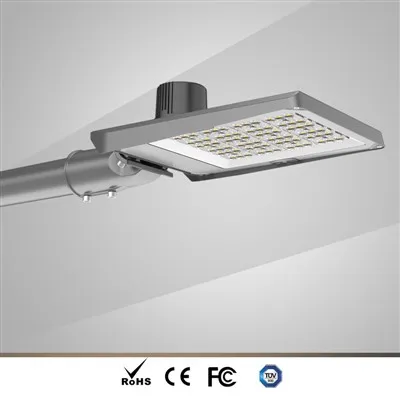

Street light installation looks simple - plant a pole, mount a light, connect the power - but the difference between a rushed job and a disciplined one shows up in reliability and safety for years. A properly installed street light stands through storms, keeps its connections dry, and performs to its photometric design, while a careless installation becomes a source of recurring faults.
The work begins before any pole goes up, with a foundation sized for the pole and the local soil and wind conditions. The foundation must hold the pole plumb and resist overturning under maximum wind load, which is why structural calculation matters as much as the luminaire selection. A foundation that is too shallow or poorly cured is the invisible cause of many leaning and toppled poles.
Pole erection comes next: the pole is lifted, set on its anchor bolts, and checked for plumb before the base is grouted. After that, the luminaire and bracket are mounted at the designed height and angle, and the wiring is run through the pole to the connection point. Every cable entry must be sealed against moisture, because water ingress into the pole or fixture is a leading cause of electrical faults.
Electrical connection follows. For grid-powered street lights, the circuit must be correctly rated, earthed, and protected, with the luminaire wired through a suitable driver and any surge protection. For solar street lights, the panel, battery, and controller are connected and the system is oriented so the panel faces the sun without shading. In both cases, the goal is a clean, waterproof, serviceable connection rather than a quick splice.
Commissioning is where installation is verified. Technicians confirm each light illuminates, measure that illumination meets the design at ground level, and check dimming or control functions where present. The result is recorded so that a future maintenance crew knows the baseline for every pole.
A real-world example shows what good installation delivers. In Jinggu County, Yunnan, a municipal lighting upgrade covering 3,151 street lights across 68 roads, five plazas, five parks, and five bridges passed final acceptance with a steady lighting rate of 99%. The project used an energy-hosting model where a professional operator handles investment, maintenance, and energy control - a structure that works precisely because the initial installation was done to a standard that could be reliably maintained.
The most common installation mistakes are avoidable: undersized foundations, unsealed cable entries, poor earthing, and skipping photometric verification. Each one converts a lighting asset into a maintenance liability. For a city or a contractor, the discipline of doing each step correctly is what turns a one-time installation into decades of dependable service.
Safety is the thread running through the entire process. Working at height on poles, handling electrical connections, and coordinating with traffic all carry real risk, so a professional installation follows proper permits, traffic management, and electrical safety procedures. Cutting corners on safety to save time is never worth it - a single incident can cost far more than the entire lighting budget and put the whole program at risk.
Documentation is the final piece that many jobs miss. Recording the pole locations, luminaire models, driver specifications, and commissioning measurements creates the baseline that future maintenance depends on. With that record, a maintenance team can respond to a fault in minutes instead of re-discovering the system from scratch; without it, every future service visit starts from zero.
designed for clean mounting, sealed cable entry, and serviceable drivers. We provide photometric layouts so your installation is verified against a clear performance target from day one.

For installation-friendly fixtures and layout support, visit luxsky-light.com/led-street-lights and talk to our team about your next project.